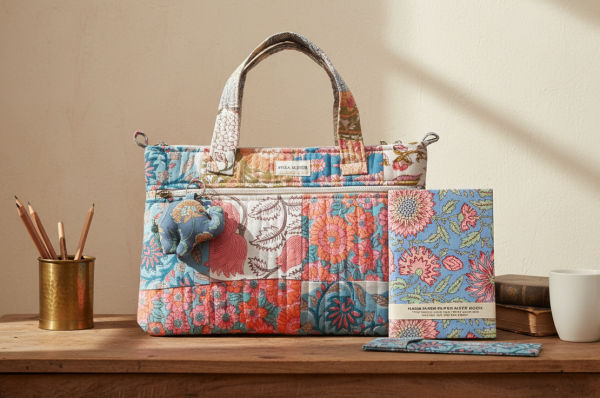
Look closely at a patterned bag. Your eye might follow a cluster of colour near the bottom, a small mark beside a handle, or an open stretch of fabric between the two. Before you have checked its pockets or decided where you will carry it, you have already started to notice its character.
An eco-printed bag invites that kind of attention. Pieces can belong to the same collection and share a similar palette, yet differ in the placement and character of their prints. Understanding why makes choosing one more interesting—and helps you know what to ask before buying.
What is an eco-printed bag?
Eco-printing is a botanical printing technique in which plant material is placed against a surface, such as fabric, to transfer colour and create marks. Common methods hold leaves or flowers against the cloth in a bundle and use heat to help the transfer. The result can include recognisable plant shapes, softer impressions or areas of colour.
That is different from simply printing a drawing of a leaf onto a bag. A botanical-looking motif does not, on its own, tell you how the fabric was made. For a useful introduction to the distinction, textile educator Gumnut Magic explains natural dyeing and eco-printing through examples of both techniques.
At Mysa, our Eco Printed Tote Bag uses natural dyes and is handcrafted by rural women. Its light background and scattered warm-coloured marks make the pattern part of the bag’s everyday appeal.

Why do botanical prints vary?
Plant material is not a repeatable printing plate. Its shape and its position against the fabric contribute to the result. The cloth and the way it is prepared also matter. Eco-printing practitioner Kaliko’s documented fabric samples show how changing preparation and printing conditions can produce visibly different impressions.
The person making the piece brings choices to that process: where to place a mark, how much space to leave around it and how the finished fabric becomes an object. Those choices help explain why two pieces can feel related without looking identical.
This is a general explanation of botanical printing. Individual workshops use different methods, so a description of eco-printing should not be taken as a precise recipe for every bag.
Three things to notice when you look at an eco-printed tote
1. The balance of colour and space
Does your eye settle on a concentrated patch of colour, or move between small marks? Some people enjoy a lively surface; others prefer more of the base fabric to show. Neither preference needs a technical explanation. Notice which arrangement you would enjoy carrying.
2. The edges of the marks
Look for a mix of outlines, softer edges and less literal shapes. You do not have to identify a particular plant to enjoy a print. A close-up photograph can help you see details that disappear in a small shop thumbnail.
3. The pattern on the finished bag
A flat piece of cloth and a finished tote are different things. Handles, seams and folds change how you see the surface. Look at the bag as a whole, then at its details. If the appearance of the reverse side matters to you, ask to see that too.
Individual character should come with thoughtful construction
Variation in a print is one part of a handmade bag. Its usefulness deserves just as much attention. Check that the dimensions suit what you carry, ask about the lining and closure, and look at how the handles join the body.
You should be able to understand what you are buying. If a bag is intended for a laptop, heavy books or another particular load, confirm its suitability rather than judging capacity from a photograph. Handmade character does not remove the need for clear specifications or sound finishing.
Our guide to handmade fabric bags for everyday use explores different formats, from totes to laptop bags and small organisers.
Will the bag I receive match the photograph?
For a one-of-a-kind piece, this is a sensible question to ask. Check whether the listing shows the exact item available or an example of the design. If you have a strong preference for a particular colour balance or arrangement, contact Mysa before ordering to ask about the available pieces.
You might ask for a view of both sides, a closer look at the fabric and confirmation of the dimensions. That small conversation helps you choose with confidence, especially when the bag is a gift.
Eco-printed and upcycled describe different things
Eco-printing describes how a surface is decorated. Upcycling describes giving existing material another useful life. A piece can be both, but one term does not automatically establish the other. Look for a specific description of the material and making process rather than relying on a single label.
The technique also appears beyond bags. Mysa’s Eco-printed Scarf is described as hand-dyed with flowers and natural dyes, printed with leaves, and made by rural women of Ramsar Palawala. It offers another way to enjoy botanical pattern in an everyday textile.

Caring for your Mysa bag
For Mysa products, use gentle hand washing only. Avoid machine washing or heavy agitation, use mild detergent and dry in the shade. Let the bag dry fully before putting it away. If you are unsure how to clean a particular detail or mark, ask us before trying a treatment.
Choose the piece you want to keep reaching for
A useful bag earns its place through ordinary days: a small shopping trip, a visit to a friend, a notebook carried to a café. Its print can make those familiar moments a little more personal.
Explore the Mysa Eco Printed Tote Bag or browse our bags and pouches collection. Start with what you need it to carry, then take a closer look at the piece that catches your eye.