
Before another toy joins the basket, pause for a moment. Beyond the colour, the cute face and the excitement of something new, what kind of play might it invite?
Choosing a thoughtful toy does not mean creating a perfect playroom. It means looking for something that fits your child’s interests, leaves room for their ideas and is practical to live with. These three questions are a useful place to start—whether you are shopping for your own child or choosing a meaningful gift.
1. Does it invite imagination?
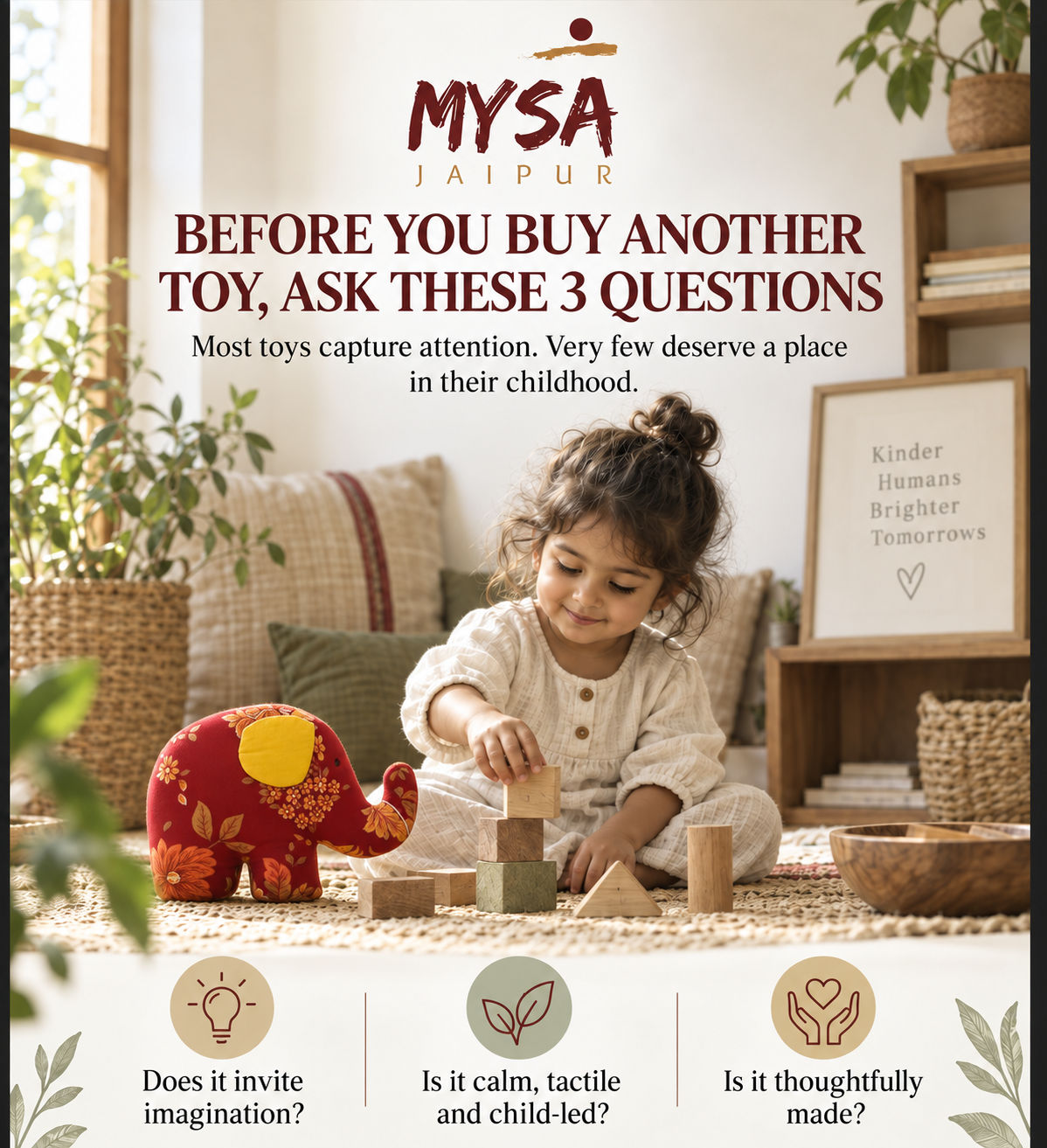
A toy with an open-ended role lets a child decide what happens next. An elephant can be a jungle explorer one day, a passenger on a cushion train the next, and a guest at an imaginary picnic after that. There is no single story to finish and no script to follow.
When you look at a toy, try imagining three different ways to play with it. Could it become a character? Could it join toys you already own? Could a child give it a name, a home or an adventure?
The American Academy of Pediatrics highlights toy animals and dolls as examples of pretend-play toys that give children opportunities to use words and stories. Its toy-buying guidance also reminds families that simple objects can offer plenty of play value.
A fabric animal such as Mysa’s Gappu Elephant Toy can join that kind of storytelling. Try asking, “Where is the elephant going today?” Then let your child decide whether it needs a bridge, a friend or a rest. You do not need to turn the answer into a lesson.
2. Is it calm, tactile and child-led?
Here, “calm” means making room for quieter play—not expecting a child to sit still or promising that a toy will change their mood. Some days play is noisy and energetic; on others, a small corner with a few familiar objects is enough.
Tactile play begins with what a child can handle and explore: the feel of fabric, the shape of a toy, or the way objects sit beside one another. Child-led play means the child gets to choose the story and pace, while an adult provides suitable materials and supervision.
Before buying, ask yourself: does this toy leave decisions to the child? Can it be enjoyed without a sequence of instructions? Is it comfortable and manageable for the person who will use it?
For a simple play invitation, place a fabric animal beside a cardboard box and a few age-appropriate blocks. The box might become a home, a bus or something you would never have thought of. Offer a starting point, then follow your child’s interest rather than directing every step.
Mysa’s Bozo Dog Toy and Piku Parrot Toy offer other characters to explore. Choose the animal your child is drawn to; a whole collection is not needed to begin a story.
3. Is it thoughtfully made?
A meaningful toy should have clear, practical details behind its appearance. Look for information about the outer fabric, the filling, how the parts are attached and how to care for it. “Handmade” tells you something about the process, but it is still worth asking specific questions.
- What is it made from? Read the outer-material and filling information separately. Gappu’s product listing specifies cotton fabric and cotton filling.
- How is it put together? Look closely at the seams, embroidered details and attachments, and check them again during use.
- Who makes it? Mysa works with rural women artisans in Jaipur, using hand stitching to turn fabric into toys with individual character.
- How will you care for it? A clear washing routine helps you choose something that fits everyday life.
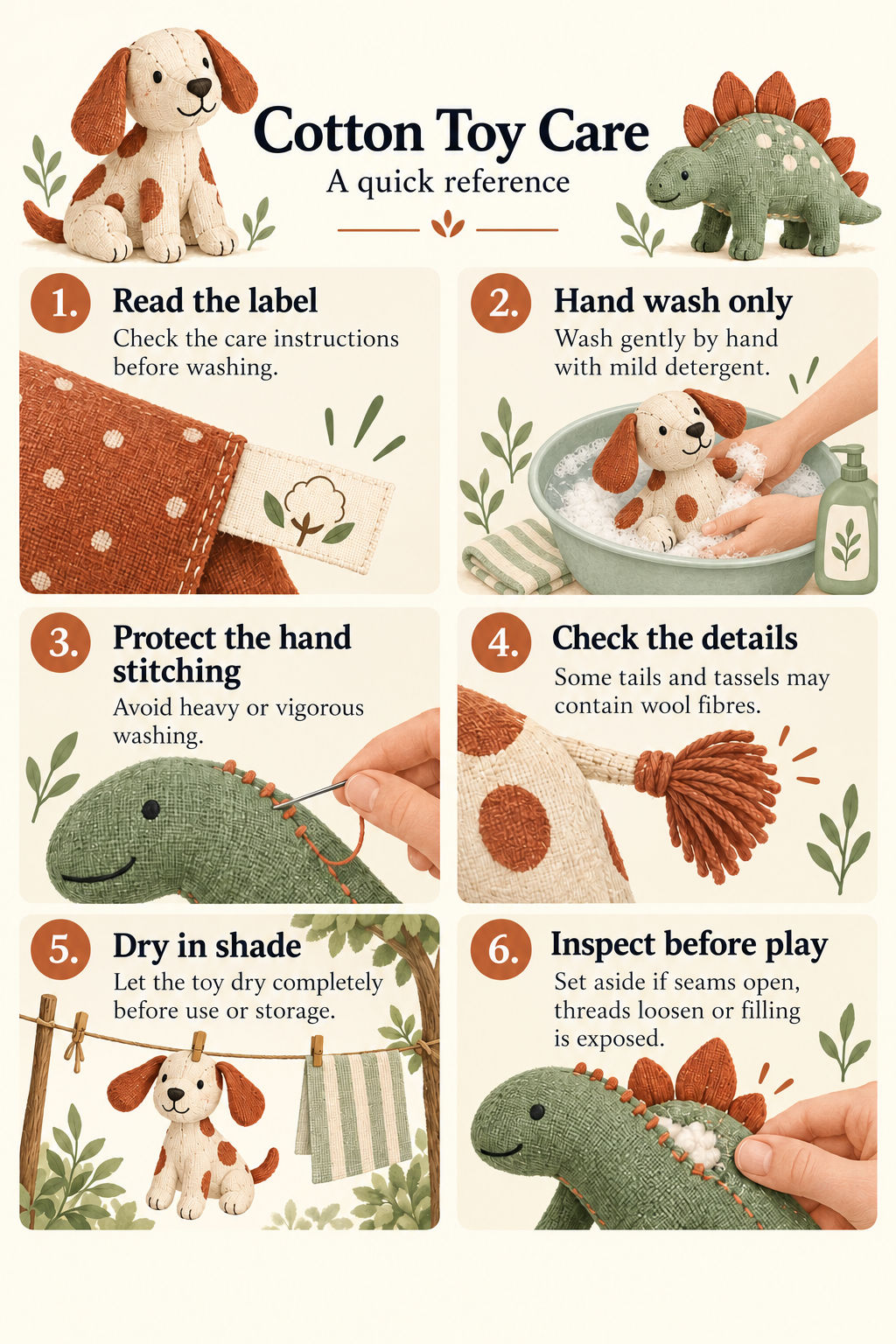
Mysa’s care guidance is hand wash only: wash gently with mild detergent, avoid machine washing and bleach, and let the toy dry completely in the shade before use or storage. For a closer look at materials, seams and everyday care, read Choosing a Cotton Toy: Materials, Stitching and Care.
Keep age suitability in the decision
These three questions help you think about play value; they do not replace the age guidance and warnings for a particular toy. Check those details, especially when buying for a young child. A cotton outer or a handmade label alone does not establish suitability for every age. The AAP’s toy-safety checklist is a useful companion when choosing a gift.
If a seam opens, a detail loosens or filling becomes exposed, set the toy aside and ask about repair before returning it to play. If you are unsure about a Mysa toy’s details or suitability, ask us on WhatsApp before ordering.
A little more thought before the next toy
Does it invite imagination? Does it leave space for tactile, child-led play? Can you understand how it was made and how to care for it?
You may find a new companion—or realise that a favourite toy already at home is ready for another adventure. When you do want to add something, explore Mysa’s handmade toy collection and choose a character with room for your child’s own story.